Não há como ficar aparatosamente constipada para logo prometer vir a repor uma conduta saudável...mais ou menos diária :)
Calha bem porque vamos mudar de calendário e tudo!
Convido a olhar o site da Federação Portuguesa de Cicloturismo e Utilizadores de Bicicleta (FPCUB) e espreitar as novidades (vídeos, textos...).
Deixo o destaque para actividades:
I. A FPCUB organiza no dia 6 de Janeiro, em Lisboa, o 1º Passeio de Cicloturismo do ano 2008.
Para mais informação basta consultar o site da FPCUB.
http://www.fpcub.pt/portal/index.php
II. As inscrições para participação na edição do Lisboa Bike Tour 08 poderão ser feitas a partir do dia 2 de Janeiro 2008 ( nos CTT).
http://www.lisboabiketour.com/
Desejos de um óptimo ano 2008 para todos!
domingo, 30 de dezembro de 2007

quarta-feira, 19 de dezembro de 2007
Reciclagem
«ponto electrão» chega a centros comerciais
"Uma das associações que gerem a reciclagem de equipamentos eléctricos está a colocar em cinco centros comerciais portugueses contentores para colocar torradeiras, secadores, batedeiras ou telemóveis velhos, com o objectivo de aproximar os cidadãos da reciclagem destes equipamentos(...)", in Diário Digital.
"Uma das associações que gerem a reciclagem de equipamentos eléctricos está a colocar em cinco centros comerciais portugueses contentores para colocar torradeiras, secadores, batedeiras ou telemóveis velhos, com o objectivo de aproximar os cidadãos da reciclagem destes equipamentos(...)", in Diário Digital.
sábado, 15 de dezembro de 2007
Conferência da ONU para as alterações climáticas
Ontem, representantes de 190 países aprovaram em Bali (Indonésia) um roteiro para as negociações de um novo acordo patrocinado pela ONU (UNFCCC) para o combate ao aquecimento global, entre eles os EUA. Os resultados não parecem extraordinários. Os países signatários concordaram apenas em negociar dentro de determinados pressupostos e num rumo político mais bem definido.
Os principais pontos do acordo são (Ricardo Garcia/Público):
- Estão lançadas as negociações, com vista a um novo tratado para conter o aquecimento global, a concluir até 2009 e incluindo os Estados Unidos.
- Para todos os países desenvolvidos, serão consideradas, nestas negociações, novos “compromissos” ou “acções”, incluindo metas de redução ou limitação de gases com efeito de estufa. Os compromissos deverão ser comparáveis entre si e levar em conta as realidades próprias de cada país.
- Para os países em desenvolvimento, serão estudadas “acções” nacionais voluntárias, suportadas por apoios na área da tecnologia, capacitação e finanças.
- O acordo não inclui nenhuma meta indicativa de redução de emissões de gases com efeito de estufa no futuro. Mas cita, numa nota de rodapé, um capítulo de um relatório do Painel Intergovernamental para as Alterações Climáticas, onde essas metas indicativas são referidas.
- Nas negociações para um novo tratado, serão considerados também os temas da adaptação, tecnologia e financiamento.
- O tratado também deverá considerar “incentivos positivos” para combater a desflorestação e a degradação de florestas.
- Paralelamente, correrá o processo de revisão do Protocolo de Quioto, que não inclui os EUA, e a fixação de novas metas de redução de emissões após 2012 para os países que ratificaram aquele acordo.
Os principais pontos do acordo são (Ricardo Garcia/Público):
- Estão lançadas as negociações, com vista a um novo tratado para conter o aquecimento global, a concluir até 2009 e incluindo os Estados Unidos.
- Para todos os países desenvolvidos, serão consideradas, nestas negociações, novos “compromissos” ou “acções”, incluindo metas de redução ou limitação de gases com efeito de estufa. Os compromissos deverão ser comparáveis entre si e levar em conta as realidades próprias de cada país.
- Para os países em desenvolvimento, serão estudadas “acções” nacionais voluntárias, suportadas por apoios na área da tecnologia, capacitação e finanças.
- O acordo não inclui nenhuma meta indicativa de redução de emissões de gases com efeito de estufa no futuro. Mas cita, numa nota de rodapé, um capítulo de um relatório do Painel Intergovernamental para as Alterações Climáticas, onde essas metas indicativas são referidas.
- Nas negociações para um novo tratado, serão considerados também os temas da adaptação, tecnologia e financiamento.
- O tratado também deverá considerar “incentivos positivos” para combater a desflorestação e a degradação de florestas.
- Paralelamente, correrá o processo de revisão do Protocolo de Quioto, que não inclui os EUA, e a fixação de novas metas de redução de emissões após 2012 para os países que ratificaram aquele acordo.
sexta-feira, 14 de dezembro de 2007
anabela carvalho sobre os media e as alterações climáticas
 Gostaríamos de agradecer a amável presença e disponibilidade da Profª Anabela Carvalho, ontem no primeiro debate da Plataforma. Assim, proporcionou-se um início de grande nível para o ciclo de debates, que segue já em Fevereiro. Obrigada também ao Miguel Brito, pela capacidade de animar e moderar a discussão pública que se seguiu.

quinta-feira, 13 de dezembro de 2007
N2O release from agro-biofuel production negates global warming reduction by replacing fossil fuels
Um artigo interessante em que demonstra outra vertente dos problemas associados com os biocombustíveis.
"Abstract
The relationship, on a global basis, between the amount of N fixed by chemical, biological or atmospheric processes entering the terrestrial biosphere, and the total emission of nitrous oxide (N2O), has been re-examined, using known global atmospheric removal rates and concentration 5 growth of N2O as a proxy for overall emissions. The relationship, in both the pre-industrial period and in recent times, after taking into account the large-scale changes in synthetic N fertiliser production and deforestation, is consistent, showing an overall conversion factor of 3–5%. This factor is covered only in part by the 1% of “direct” emissions from agricultural crop lands estimated by IPCC 10 (2006), or the “indirect” emissions cited therein. This means that the extra N2O entering the atmosphere as a result of using N to produce crops for biofuels will also be correspondingly greater than that estimated just on the basis of IPCC (2006). When the extra N2O emission from biofuel production is calculated in “CO2-equivalent” global warming terms, and compared with the quasi-cooling effect of “saving” emissions of 15 fossil fuel derived CO2, the outcome is that the production of commonly used biofuels, such as biodiesel from rapeseed and bioethanol from corn (maize), can contribute as much or more to global warming by N2O emissions than cooling by fossil fuel savings. Crops with less N demand, such as grasses and woody coppice species have more favourable climate impacts. This analysis only considers the conversion of biomass to 20 biofuel. It does not take into account the use of fossil fuel on the farms and for fertilizer and pesticide production, but it also neglects the production of useful co-products. Both factors partially compensate each other. This needs to be analyzed in a full life cycle assessment."
"Abstract
The relationship, on a global basis, between the amount of N fixed by chemical, biological or atmospheric processes entering the terrestrial biosphere, and the total emission of nitrous oxide (N2O), has been re-examined, using known global atmospheric removal rates and concentration 5 growth of N2O as a proxy for overall emissions. The relationship, in both the pre-industrial period and in recent times, after taking into account the large-scale changes in synthetic N fertiliser production and deforestation, is consistent, showing an overall conversion factor of 3–5%. This factor is covered only in part by the 1% of “direct” emissions from agricultural crop lands estimated by IPCC 10 (2006), or the “indirect” emissions cited therein. This means that the extra N2O entering the atmosphere as a result of using N to produce crops for biofuels will also be correspondingly greater than that estimated just on the basis of IPCC (2006). When the extra N2O emission from biofuel production is calculated in “CO2-equivalent” global warming terms, and compared with the quasi-cooling effect of “saving” emissions of 15 fossil fuel derived CO2, the outcome is that the production of commonly used biofuels, such as biodiesel from rapeseed and bioethanol from corn (maize), can contribute as much or more to global warming by N2O emissions than cooling by fossil fuel savings. Crops with less N demand, such as grasses and woody coppice species have more favourable climate impacts. This analysis only considers the conversion of biomass to 20 biofuel. It does not take into account the use of fossil fuel on the farms and for fertilizer and pesticide production, but it also neglects the production of useful co-products. Both factors partially compensate each other. This needs to be analyzed in a full life cycle assessment."
terça-feira, 11 de dezembro de 2007
Solar power: The future's bright
N theory, solving the world's energy problems should be pretty straightforward. Locate a piece of sun-drenched land about half the size of Texas, find a way to capture just 20 per cent of the solar energy that falls there and bingo - problem solved. You have enough power to replace the world's entire energy needs using the cleanest, most renewable resource there is.
Can it really be that easy? For years, supporters of solar power have heralded every new technical breakthrough as a revolution in the making. Yet time and again it has failed to materialise, largely because the technology was too expensive and inefficient and, unlike alternatives such as nuclear and wind power, no substantial subsidies were available to kick-start a mass transition to solar energy. This time things are different. A confluence of political will, economic pressure and technological advances suggests that we are on the brink of an era of solar power.
The prospect of relying on the sun for all our power demands - conservatively estimated at 15 terawatts in 2005 - is finally becoming realistic thanks to the rising price of fossil fuels, an almost universal acceptance of the damage they cause, plus mushrooming investment in the development of solar cells and steady advances in their efficiency. The tried-and-tested method of using the heat of the sun to generate electricity is already hitting the big time (see "Hot Power"), but the really big breakthroughs are happening in photovoltaic (PV) cells.
Ever since the first PV cell was created by Bell Labs in 1954, the efficiency with which a cell can convert light into electricity has been the technology's Achilles' heel. The problem is rooted in the way PV cells work. At the heart of every PV cell is a semiconducting material, which when struck by a photon liberates an electron. This can be guided by a conductor into a circuit, leaving behind a "hole" which is filled by another electron from the other end of the circuit, creating an electric current
Photons from the sun arrive at the semiconductor sporting many different energies, not all of which will liberate an electron. Each semiconducting material has a characteristic "band gap" - an energy value which photons must exceed if they are to dislodge the semiconductor's electrons. If the photons are too weak they pass through the material, and if they are too energetic then only part of their energy is converted into electricity, the rest into heat. Some are just right, and the closer the photons are to matching the band gap, the greater the efficiency of the PV cell.
Bell Labs discovered that silicon, which is cheap and easy to produce, has one of the best band gaps for the spectrum of photon energies in sunlight. Even so, their first cell had an efficiency of only 6 per cent. For a long time improvements were piecemeal, inching up to the mid-teens at best, and at a cost only military and space exploration programmes could afford. The past decade has seen a sea change as inexpensive cells with an efficiency of 20 per cent have become a commercial reality, while in the lab efficiencies are leaping forward still further.
Last year, Allen Barnett and colleagues at the University of Delaware, Newark, set a new record with a design that achieved 42.8 per cent energy conversion efficiency. Barnett says 50 per cent efficiency on a commercial scale is now within reach. Such designs, married to modern manufacturing techniques, mean costs are falling fast too
As a result, in parts of Japan, California and Italy, where the retail price of electricity is among the world's highest, the cost of solar-generated electricity is now close to, and in some cases matches, that of electricity generated from natural gas and nuclear power, says Michael Rogol, a solar industry analyst with Photon Consulting, based in Aachen, Germany. For example, in the US the average price of conventionally generated electricity is around 10 cents per kilowatt-hour. The cost of solar-generated electricity has fallen to roughly double that. This has created a booming market for PV cells - now growing by around 35 per cent annually - and private investors are starting to take a serious interest. The value of stocks in companies whose business focuses primarily on solar power has grown from $40 billion in January 2006 to more than $140 billion today, making solar power the fastest-growing sector in the global marketplace.
“
”In some places, the cost of solar-generated electricity is close to that of electricity from conventional sources
George W. Bush has acknowledged this new dawn, setting aside $168 million of federal funds for the Solar America Initiative, a research programme that aims to make the cost of PV technology competitive with other energy technologies in the US by 2015. Rogol thinks Bush's target is achievable. He says the cost of manufacturing PV equipment has fallen to the point where, in some places, PV-generated electricity could already be produced for less than conventional electricity. Manufacture PV cells at $1 per watt of generating capacity and the cost should be competitive everywhere.
Perhaps surprisingly, given its less than cloudless skies, one of the countries leading the solar revolution is Germany. In November 2003, amid rising oil and gas prices and growing concern over global warming, its parliament agreed a "feed-in tariff" programme, which guarantees a market for solar power. Anyone who produces electricity from solar power can sell it to the national grid for between ¬0.45 and ¬0.57 per kilowatt-hour, which is almost three times what consumers pay for their electricity, roughly ¬0.19 per kilowatt-hour. Germany's power-generating companies are required by law to pay this premium, which is guaranteed until 2024. This guarantee has spurred enterprising individuals to invest in solar panels, confident of earning back the cost of their systems and possibly turning a profit. Today there are over 300,000 PV systems in Germany, mostly on the rooftops of homes and small businesses, and Germany is the world's fastest-growing PV market. It has 55 per cent of the world's installed base of PV panels and can generate around 3 gigawatts of electricity from solar energy, equivalent to between three and five conventional power stations.
Last year, following in Germany's footsteps, Italy and Spain launched their own tariff programmes, while the California Solar Initiative earmarked $2.8 billion for cash incentives that will subsidise new PV installations to the tune of up to $2.50 per watt, with the aim of creating 3 gigawatts of capacity by 2016. By the end of 2008, 20 nations will have similar tariff programmes for solar power, Rogol predicts.
The hope is that by spurring demand, these subsidies will also stimulate PV research and manufacturing technology, driving down costs. This may help speed the development of existing PV technologies, but could also drive the industry down a blind alley, as silicon PVs may soon reach their theoretical efficiency limit of about 30 per cent. Yet according to Martin Green at the University of New South Wales, Australia, it should be possible to create cells from other materials with a 74 per cent efficiency limit. And while subsidies go some way to stimulating the market, most analysts agree that the cost of existing PV cells is too high for the technology to hit the mainstream.
That's why researchers have been looking at alternative designs. One of the cheapest cells to manufacture is the thin-film cell, in which semiconductor compounds are sprayed onto a flexible substrate. Thin-film cells use as little as 1 per cent of the volume of materials that ordinary PV cells demand, and the band gap of the cells can be improved by adjusting the proportions of the ingredients that form the film. For example, cells that use a low-cost blend of copper, indium, a pinch of gallium, and selenium (CIGS), have already achieved an efficiency of around 19 per cent in lab tests. The material's efficiency is so high relative to its cost that researchers have shifted their attention from boosting CIGS's photon-collecting power to slashing the cost of producing the cells. This could enable the technology to deliver grid-competitive electricity within five years.
Grand designs
One innovation aimed at improving mainstream solar-cell design is the use of lenses to focus and amplify the amount of light hitting the PV material. Among the most successful designs to incorporate a concentrating lens is one created by Soliant Energy, a California start-up company staffed by scientists formerly at NASA's Jet Propulsion Laboratory. Its PV module is a box holding rows of half-pipes, like gutters facing skywards. The trough of each half-pipe is lined with a strip of PV material, while the open side of the pipe is covered with an acrylic lens that concentrates sunlight by a factor of 500. This slashes the quantity of PV material required for a given power output, and thus the cost of the cell.
The company's next generation of PV modules will couple concentrators with PV crystals made by Spectrolab, Boeing's subsidiary which engineers PV materials for NASA space probes. With efficiencies of up to 40 per cent, these alternative materials are twice as good as current silicon PV cells, says Brad Hines, Soliant's founder and chief technology officer. The downside is that they cost 100 times as much, but Soliant has found a way of using just a sliver of the amount used in spacecraft solar cells, keeping them affordable.
Barnett's record-breaking cell also uses a concentrator, but it only needs to intensify the light by a factor of 20. The real breakthrough in Barnett's design is to split the incoming light into separate beams, each containing a narrow range of wavelengths. These are each directed into materials optimised to convert those frequencies into electricity.
Light entering the cell first falls onto PV material that absorbs high-energy wavelengths of light up to 500 nanometres. Longer wavelengths slip through to a dichroic mirror - a material that reflects certain wavelengths while allowing others to pass through it. Here, light with wavelengths of between 500 and 900 nanometres is reflected onto one photovoltaic stack, while wavelengths longer than 900 nanometres pass through the mirror and fall onto another stack
Barnett's group is stepping back to let engineers at DuPont and other companies take on the task of producing a prototype. The US Defense Advanced Research Projects Agency has committed $33 million to the project, while cash from private investors could bring the total investment to as much as $100 million. Barnett says PV modules based on the new design could be up to 50 per cent efficient and should go on sale within five years, costing under $2 per watt.
There are yet more ambitious plans to build cheap, efficient PV cells. Several groups worldwide are now working with nanocrystals called quantum dots (see New Scientist, 27 May 2006, p 44) with the aim of developing low-cost PV cells with an efficiency of 42 per cent. The nanocrystal's special properties mean one photon of light will release up to four electrons.
Martin Green, one of the leaders in the field, is designing quantum dots to match specific light spectra and so make them more energy efficient. He wants to address a specific problem with conventional solar cells: some of the energy supplied by an incoming photon is lost as heat. Green is designing "hot carrier" cells that should transfer more of the energy from the photon to the electron, producing a higher output voltage. "In principle, a hot carrier cell would have an efficiency quite close to the 74 per cent limit," he says.
The challenge in creating a hot carrier cell is collecting the electrons quickly, before they move around the semiconducting material and lose their energy. That would mean creating a semiconductor shot through with nanowires or other collectors that would gather up electrons as soon as they are liberated from atoms - a requirement that could send manufacturing costs skyrocketing. "So far," Green acknowledges, "we don't know how to do that."
Allen Heeger, at the University of California, Santa Barbara, is trying another approach. The co-inventor of plastics that can conduct electricity, Heeger has created a semiconducting plastic which allows incoming photons to liberate electrons, just as in silicon and other photovoltaic materials. In July, Heeger unveiled a two-layer polymer PV stack that reached 6.5 per cent efficiency, a record for plastic solar cells.
The promise of plastic PV cells, Heeger points out, is that they could be manufactured using a kind of printing process "similar to the way newspapers are printed", because all the materials they are made of are soluble. "We have a goal of getting to 10 per cent efficiency and eventually well beyond that," he says, but he's not too bothered about efficiency. "The critical comparison is dollars per watt," he says. "Even if our efficiency is lower than silicon, the cost per watt could still be better because this is such a low-cost manufacturing process."
And perhaps that's where the true promise of solar power lies, not in expensive high-efficiency cells, but in clever new designs that are dirt cheap to produce. It has been a long slow revolution, but finally years of diligent research and investment by a group of true believers is beginning to pay off. Solar power has finally come of age.
Energy and Fuels - Learn more about the looming energy crisis in our comprehensive special report.
Climate Change - Want to know more about global warming: the science, impacts and political debate? Visit our continually updated special report.
Bennett Daviss is a science writer in New Hampshire
From issue 2633 of New Scientist magazine, 08 December 2007, page 32-37
Hot power
Exotic photovoltaic materials aren't the only way to convert sunlight into electricity. Over the past few decades, techniques have been developed that use mirrors to concentrate the sun's rays and convert the heat this generates into electricity on a commercial scale.
The most widely used so far is the solar trough concentrator system. Rows of parabolic mirrors track the sun, focusing its energy onto tubes filled with a fluid such as oil or water. The liquid is heated to around 400 °C and circulated to a conventional steam turbine to generate electricity. Solar trough systems convert roughly 20 per cent of the sun's heat they capture into electricity, comparable with some commercial photovoltaic cells, but at a fraction of the cost.
In the late 1980s, nine parabolic-trough energy farms were built in the Nevada desert. Together covering just over 1 square kilometre, they produced 354 megawatts of electricity. Plans to expand the farm were abandoned in the early 1990s when the price of fossil fuels slumped, but they kept supplying power to the grid. Now, with energy prices on the rise, plans are being drawn up to revive the technology. In December 2005 the first trough system built in the US since 1988 was switched on in Seguaro, Arizona. It is capable of generating 1 megawatt of power.
An alternative to the trough system is the solar tower, pictured above, in which a field of flat mirrors track the sun and reflect its rays onto water pipes. The water boils, generating steam that drives a turbine. This approach achieves an efficiency of around 15 per cent. The first commercial solar tower, with a capacity of 11 megawatts, was completed in 2005 near Seville in Spain. Construction of a second tower, capable of generating 20 megawatts, began last year.
New solar tower designs replace the water with molten salts (for example, a mix of sodium nitrate and potassium nitrate) which can be heated to 600 °C. The heat can be used immediately to produce steam to drive a turbine, or stored and used overnight or when clouds block the sun.
Another method uses dish-shaped mirrors around 10 metres in diameter to focus solar energy onto a Stirling engine, which contains a gas that expands under heating and so drives a generator. At 24 per cent, its efficiency beats all other solar concentrator systems. In 2005, the California Public Utilities Commission, the state body responsible for regulating private power stations, gave the go-ahead for the world's biggest solar dish concentrator farm to be built in the Mojave desert, north-east of Los Angeles. When completed in 2010, its 20,000-dish array will generate 500 megawatts.
Divorce is costing the Earth
COULD a rising tide of divorce be helping to kill the planet? It looks that way from a 12-country analysis of the environmental impact of broken marriage.
When couples split, they and their families move into separate properties, so collectively occupy more space, burn more energy and consume more water than they did as a family unit. "Divorced households are smaller than married households but consume more land, water and energy per person than married households," says Jianguo Liu of Michigan State University, East Lansing.
In the US, for example, 2.37 trillion litres of water, 38 million rooms and 734 billion kilowatt-hours of electricity would have been saved in 2005 alone if no one had got divorced. Divorced households spent 46 per cent more on electricity and 56 per cent more water per person than if they'd stayed married. Following a split, US households consumed 42 to 61 per cent more resources per person than while married.
The problem is likely to get worse, Liu warns. Between 1970 and 2000, the proportion of US households headed by divorcees soared from 5 to 15 per cent. Divorces are also steadily increasing in China (Proceedings of the National Academy of Sciences, DOI: 10.1073/pnas.0707267104).
Climate Change – Want to know more about global warming: the science, impacts and political debate? Visit our continually updated special report.
Big business smells the cash in carbon cuts
TIME was when industry baulked at action to cut its emissions of greenhouse gases. But as the UN climate negotiations opened in Bali, Indonesia, on Tuesday, 150 of the world's largest businesses - from Nestlé to Shell - called for tougher targets to cut global emissions by at least 50 per cent by 2050.
The biggest and smartest beasts in the corporate jungle figure they can make money from combating climate change. And the tougher the targets the more money they can make. "The shift to a low-carbon economy will create significant business opportunities," said the joint statement, published in the London Financial Times.
The declaration is probably the last nail in the coffin for the Bush administration's push for a voluntary approach to climate change. Major US corporations such as Coca-Cola, DuPont and GE agreed that only a "comprehensive legally binding UN agreement will provide business with the certainty it needs to scale up global investment in low-carbon technologies".
"
"It is probably the last nail in the coffin for the voluntary approach to climate change
The Bali meeting is the focus for reaching that agreement, and is expected to draw up a "road map" for two years of negotiations on a successor to the Kyoto protocol, which ends in 2012. Working groups have already concluded that industrialised countries will need to cut their emissions by 25 to 40 per cent by 2020 - 10 times faster than under Kyoto.
Climate Change - Want to know more about global warming: the science, impacts and political debate? Visit our continually updated special report.
segunda-feira, 10 de dezembro de 2007
Professora Anabela Carvalho
domingo, 2 de dezembro de 2007

sexta-feira, 30 de novembro de 2007
Estudo finlandês diz que as árvores europeias estão a absorver mais carbono
As árvores da União Europeia (UE) estão a absorver mais dióxido de carbono desde 1990, segundo um estudo de investigadores da Universidade de Helsínquia, segundo o qual o aumento das áreas florestadas pode ser a solução para a UE cumprir os 20 por cento de redução de emissões até 2020.
Também no portal
Ambiente: Forestas europeias estão a absorver mais dióxido de carbono que o previsto
Também no portal
Ambiente: Forestas europeias estão a absorver mais dióxido de carbono que o previsto
China surges ahead on clean energy spending
23 November 2007
NewScientist.com news service
NewScientist.com news service
CHINA is leaving the US in the dust in its spending on clean energy - but it still has plenty to do if it is to shake off its sooty reputation.
According to a study released last week by the Washington-based think tank, Worldwatch Institute, China will invest more than $10 billion on renewable energy this year - double the amount invested by the US in 2006. China is on track to hit its goal of 15 per cent energy from renewables by 2020, up from 8 per cent today, the authors say. "I think the targets are realistic, even conservative based on what they have done so far," says Eric Martinot.
However, China remains heavily dependent on coal, the fossil fuel that emits the most carbon per unit of energy. Seventy per cent of its energy comes from coal compared with less than 25 per cent in the US.
terça-feira, 27 de novembro de 2007
Why bother going green? - Talvez no ambito de consumo responsavel?
17 November 2007
Fred Pearce
New Scientist
Fred Pearce
New Scientist
PLENTY of people say it, and the rest of us probably think it as we browse the energy-efficient light bulbs, unplug our TV or leave the car and walk to the shops instead. What's the point in cutting our personal carbon footprint when more than a billion Chinese and most of the rest of the planet are jacking up their emissions as if there were no tomorrow?
It's a fair question. After all, the atmosphere doesn't distinguish between a tonne of Chinese carbon dioxide and a tonne emitted by the west. As the rest of the world carries on regardless, are the paltry savings from recycling your beer cans or insulating your roof anything more than a drop in the ocean? If you just stopped trying, would the planet notice? In this special investigation, we crunch the numbers to find out whether going green is worth all the bother.
First though, the big picture. Every year human activities add about 30 billion tonnes of CO2 to the atmosphere, largely through burning fossil fuels but also through destroying natural carbon sinks, such as forests. Half of this CO2 is absorbed by the remaining forests, soils and oceans, but the rest accumulates in the atmosphere.
Since pre-industrial times, the concentration of CO2 in the air has risen by a little over one-third, from 270 parts per million to 380 ppm - or from 2.2 trillion tonnes to almost 3 trillion. Most scientists think it would be unsafe to let CO2 concentrations rise beyond 450 ppm - an additional 500 billion tonnes. That level would be reached by around 2040 if emissions continue at today's rates. But as developing countries industrialise, global emissions are unlikely to stay the same. Last year, China hiked its emissions by 8 per cent, or around 450 million tonnes - an increase almost as great as the UK's entire annual carbon footprint. Emissions of other large developing countries like India, Brazil and Mexico are increasing at a similar pace.
Against this remorseless rise of CO2 from the developing world, can the individual actions of a few concerned westerners really make any difference? To answer this we first need to work out what our personal emissions are. That means including items omitted from the UN statistics - particularly international air travel - and the carbon footprint of goods made in foreign countries but imported for our use. When these are taken into account, the CO2 footprint of the average western European amounts to some 12 tonnes. For Americans and Australians, the figure is almost twice that, mainly because they drive more, in cars with bigger engines.
In general, just under half of the emissions for which each of us is responsible come from things over which we have personal control, such as how much we drive and fly and how we heat and power our homes. Of the rest, about 25 per cent of the total arises indirectly through powering our workplaces, about 10 per cent comes from maintaining public infrastructure and government, and about 20 per cent is emitted during the production of the things we buy, including food. We can still influence some of these indirect emissions through what we buy - or we could if we had access to the right kind of information - but by and large it makes sense to concentrate on the emissions we can control directly.
So how much can we realistically save and, more to the point, will it be worth it in terms of global emissions? Chris Goodall, author of How to Live a Low Carbon Life, believes so. He reckons it is possible to cut individual emissions by around 75 per cent without seriously altering our lifestyles. For a western European, that means slashing personal emissions from about 12 tonnes of CO2 to just 3 tonnes.
Cutting down
So how do we do it? Like charity, reducing your emissions begins at home
Many people are surprised at the importance of heating to most homes' carbon footprint, and clearly there are big hits to be made here. You can cut heating-related emissions by 40 per cent or more by replacing an inefficient old-style boiler with a condensing model, by improving house insulation, and by turning down the thermostat by 2 °C in winter. But the biggest gain here can be from installing a wood-burning stove in your living room. These are attractive features and heat the house using a renewable fuel. Such a stove could cut household emissions by 2 tonnes of CO2 per year or 0.9 tonnes per inhabitant, on average.
You can halve the emissions for heating water and cooking by cutting out baths, taking short showers (no power-showers please - they are as bad as baths) and by using a microwave or pressure cooker. You can also halve electricity bills. The big four energy guzzlers in most households are refrigerators, tumble dryers, computers and lighting. Of these, the tumble dryer is the worst offender. Using it for 1 hour less per week could cut a household's annual emissions by 0.07 tonnes, and cutting it out entirely will double that saving. A computer left switched on through waking hours but turned off at night will be responsible for up to 0.4 tonnes of CO2 in a year. Switching to a laptop, which is more energy-efficient, could save you 0.2 tonnes.
Switching to energy-efficient light bulbs is another smart move, saving 0.25 tonnes for a household with 25 bulbs. A digital TV set-top box on standby uses enough energy to emit 0.06 tonnes of CO2 in a year (roughly the total emissions of an average citizen of Burundi), so you can save most of that by unplugging every time you switch off the TV, and maybe half if you switch off only at night. And think about all the other kit you leave on standby. Get rigorous about unplugging every time and a typical household can save another 0.1 tonnes. It is small compared to some other savings, but significant nonetheless.
A final option is to buy into green electricity tariffs. Read the small print, though, because some companies are simply asking you to subsidise what they are already obliged to do by law. In the best schemes, however, you will be helping to ensure that more wind turbines and other green sources of electricity are built. The annual carbon savings from these greener energy sources could be as much as 0.8 tonnes of CO2 per person.
In the UK, road transport accounts for nearly one-sixth of a typical citizen's emissions, or about 1.8 tonnes per head. In the US, at 5.6 tonnes per head, it makes up more than one-quarter of a rather larger total. The average car there, carrying an average of 1.2 people, emits 556 grams of CO2 for every person-kilometre. A typical British car, also carrying 1.2 people, emits less than half this, at 180 grams of CO2 for every person-kilometre travelled. There are numerous ways of getting these figures down. The average American driver could save a whopping 2.5 tonnes per year by changing to a gasoline-electric hybrid car. In the UK the gains would be lower, but still significant, at 0.8 tonnes. Buying a smaller, more efficient car running on diesel or liquified petroleum gas could cut emissions by 0.4 tonnes per car per year. Turning off car air conditioning can save 0.1 tonnes, while driving moderately and at the most fuel-efficient speeds will enable some drivers to cut emissions by 0.2 tonnes a year.
Another idea is to delay buying a new car. A typical car takes between 3 and 5 tonnes of CO2 to manufacture. That is twice what it typically emits in a year. So even if the new model would be more fuel-efficient, it is probably better to put off buying it.
The bottom line, of course, is that we should all drive less. Getting rid of the car would be best, but is rarely practical. Sadly, cutting out short journeys to the shops does little to cut emissions. For most people it will be less than 0.1 tonnes, though cutting out a daily short journey might double that saving.
Taking public transport to work makes a much more useful contribution. With every 1500 kilometres of commuting, you save 0.5 tonnes of CO2. Public transport is generally a greener option, but there are exceptions.
Trains, for example, are quite variable. In the UK, the average emissions are 40 grams per passenger-kilometre (g/p-km) but, depending on the engine, the source of power and the journey, the figure varies from more than 70 g/p-km down to 27 g/p-km. So going by train is usually better, but a small, fuel-efficient car with four passengers may be more carbon-efficient than taking one of the less efficient trains. Be warned, too, that taking a sleeper train from, say, London to Edinburgh or Paris to Venice may not always be greener than flying. Sleeper cars carry fewer passengers than regular carriages, and that could push the carbon footprint of the typical sleeper passenger above that of someone flying the same route at a typical CO2 emission rate for short-haul flights of 150 g/p-km.
For longer journeys, coaches such as Greyhound in the US or National Express in the UK could be just the ticket. In the UK, this would save about 140 grams per kilometre for each passenger who would otherwise have made the journey by car - the difference between the 180 g/p-km from driving a typically laden car and the 40 g/p-km on a typical coach ride - while in the US you could save 516 g/p-km. Over a 200-km drive that amounts to nearly 30 kg per trip in the UK and over 100 kg in the US.
Truth about flying
If you fly more than once a year, cutting back on those journeys will be the best single thing you could do to cut your emissions. Cut out that long return flight from Europe to Miami, or the US to Rome, and you have saved 2.5 tonnes of CO2 - which is probably more than you emit from your car all year. The simple truth is that frequent fliers have carbon footprints tens of times bigger than the rest of us.
Thanks to abundant cheap flights, Britons are the world's worst offenders on this score, with average emissions equivalent to 1.6 tonnes of CO2 per person - more than double the rate for the average American. Cheap flights are booming in China and India too, but the annual carbon footprint for travel for average citizens in those two countries is still only around one-tenth of those in Europe and North America.
Of the things we buy, food makes up about another 2 tonnes of CO2 per head. Concerned consumers often make an effort to cut their carbon footprint from food by buying locally, which reduces their "food miles". This makes some sense. A quarter of the trucks on our roads are carrying food and raw materials for the food industry. Yet many of the biggest energy inputs (and hence carbon outputs) of our food come from growing and processing food, rather than transporting it. Manufacturing fertiliser, heating greenhouses and food processing are major energy guzzlers, so buying locally is by no means automatically the greenest option. Trucking in tomatoes from sunny Spain often uses less energy than heating a greenhouse in the UK, for instance.
As a rule of thumb, meat and dairy products have high carbon footprints because of the energy needed to grow the feed for the animals. Going vegetarian could halve your carbon footprint from food to 1 tonne per year, but only if you cut back on dairy products too. If you can't go without meat and milk, you could instead halve your food footprint by going organic, largely because of the saving in fertiliser. A diet made up exclusively of locally grown, non-processed and non-packaged food can strip another 0.7 tonnes from your food-based carbon footprint, bringing an impressive total saving of 1.7 tonnes per person.
Drinks packaging matters too. Smelting aluminium is one of the most energy-intensive industries in the world, and making one beer or soda can emits 170 grams of CO2. That's the same as running your TV for 3 hours. The average person gets through 120 cans in a year, which adds up to 0.2 tonnes of CO2. So always recycle your cans and, for preference, buy draught beer or bottles instead. Glass's carbon footprint is rather less than aluminium's.
By making these small changes, the average western European can cut nearly 8 tonnes from their personal carbon footprint, taking their personal emissions down to around 2 tonnes. Multiply that by enough people and the impact could be significant. Take the UK, for example. If just one-third of the UK population did the same it would save 160 million tonnes of CO2, or more than a quarter of the nation's emissions.
Yet again, given the scale of the increases in China, India and South America, is all this effort really worth it? The answer is an unequivocal yes. Emissions reductions are a bit like taxes: you may not like them, and your individual contribution may seem too measly to matter, but multiply that by several million and you can start to move mountains.
"
"Your contribution might not seem to matter, but multiply that by millions and you can move mountains
Scaled up to global level, these cuts become highly significant. If 100 million people in richer nations cut their CO2 emissions by 10 tonnes per year, on average, that would save a billion tonnes of CO2 emissions a year, or around 5 per cent of the current global total. That won't solve the problem on its own, but it would create space for China and India to grow their economies and their carbon emissions for another year. Then we would need to add another 100 million people for the next year. And so on and so on, until new low-carbon technologies become cheap enough for developing countries like China and India to adopt them without undermining their economic development.
The global community would prefer not to allow the developing world to continue increasing their emissions indefinitely. Next month, diplomats and politicians will gather in Bali, Indonesia, to discuss what to do when the Kyoto protocol expires in 2012. Many will demand limits on the growing emissions of developing countries, including China and Indonesia, which was recently revealed to have the world's third-highest emissions - when the carbon sinks it has lost to the logging of rainforests and the draining of tropical peat swamps is taken into account.
Negotiating limits for China will not be easy. It may be about even with the US as the top emitter of CO2, but divide its output by its total population and the figures look rather different. The typical Chinese citizen is responsible for less than one-quarter of the emissions of the typical American: 4.8 tonnes compared to 20 tonnes. Individual Indians and Africans have emissions averaging 1 tonne or less
With this in mind, a growing number of politicians are suggesting a fairer approach to cutting carbon, based not on national emissions but on setting tradeable individual carbon quotas (see "What's your quota?").
Ultimately, we will need to bring global emissions down low enough to match nature's ability to absorb them, which may be as low as 10 to 20 per cent of today's global emissions. But if a significant number of people change their ways and demand greener products, that will send a big signal to the market, encouraging the supply of green energy, low-carbon products, organic food and so on.
So while it may be tempting to think that only governments can act on the scale necessary to make real change by rationing carbon and setting tax regimes to provide the necessary carrots and sticks for development, there is no escaping the fact that individuals can make a difference by acting just a little bit greener. The big picture seems daunting but it can be done. And we have to start somewhere. So don't give up.
Climate Change - Want to know more about global warming: the science, impacts and political debate? Visit our continually updated special report.
segunda-feira, 26 de novembro de 2007
Líderes do Benelux viajam juntos para Lisboa
Para reduzir a emissões de Co2 inerentes à sua deslocação a Lisboa, os governantes da Bélgica, Holanda e Luxemburgo partilham o avião. Uma das críticas que foi feita ao Tratado de Lisboa, foi a quantidade de emissões associadas à deslocação dos líderes europeus, que têm que estar em Bruxelas no dia seguinte.
Ler mais
Ler mais
quarta-feira, 14 de novembro de 2007
Debate sobre consumo responsável
Tema: CONSUMO RESPONSÁVEL
Data: 15 de Março, Dia Mundial do Consumidor
Local: Faculdade de Ciências, UL
Sinopse:
O Ambiente apresenta-se o problema mais delicado do crescimento à escala global. Partilhado por todos, dificilmente até aqui foi gerido de forma satisfatória para todos. Todos consumimos o que é de todos.
Assim, é urgente debater a responsabilidade partilhada entre os cidadãos e as instituições e o significado de um consumo responsável, que deveria tomar em consideração factores ambientais e sociais.
Como podemos gerir individualmente o nosso consumo no dia-a-dia; e o que devemos exigir das instituições e da legislação sobre o consumo?
Convidados [a confirmar]:
Quercus
DECO
Coresdoglobo.org (comércio justo)
Em que diz respeito ao tema “responsabilidade individual versus responsabilidade politico-institucional” podia ser interessante convidar um/a sociólogo/a ou um/a filósofo/a.
Formato:
Painel com 3 oradores, com apresentação de 20’ cada, seguido de debate público.
Deliverables:
Artigo de divulgação do tema, a ser publicado na imprensa, com registo do evento e das apresentações e da discussão seguinte.
Dossier Consumo:
http://www.deco.proteste.pt/map/src/433621.htm
http://www.quercustv.org/spip.php?article113
http://www.crewhassan.org/ [localização actual da Cores do Globo]
Silvia Di Marco e Catarina Madruga
Data: 15 de Março, Dia Mundial do Consumidor
Local: Faculdade de Ciências, UL
Sinopse:
O Ambiente apresenta-se o problema mais delicado do crescimento à escala global. Partilhado por todos, dificilmente até aqui foi gerido de forma satisfatória para todos. Todos consumimos o que é de todos.
Assim, é urgente debater a responsabilidade partilhada entre os cidadãos e as instituições e o significado de um consumo responsável, que deveria tomar em consideração factores ambientais e sociais.
Como podemos gerir individualmente o nosso consumo no dia-a-dia; e o que devemos exigir das instituições e da legislação sobre o consumo?
Convidados [a confirmar]:
Quercus
DECO
Coresdoglobo.org (comércio justo)
Em que diz respeito ao tema “responsabilidade individual versus responsabilidade politico-institucional” podia ser interessante convidar um/a sociólogo/a ou um/a filósofo/a.
Formato:
Painel com 3 oradores, com apresentação de 20’ cada, seguido de debate público.
Deliverables:
Artigo de divulgação do tema, a ser publicado na imprensa, com registo do evento e das apresentações e da discussão seguinte.
Dossier Consumo:
http://www.deco.proteste.pt/map/src/433621.htm
http://www.quercustv.org/spip.php?article113
http://www.crewhassan.org/ [localização actual da Cores do Globo]
Silvia Di Marco e Catarina Madruga
segunda-feira, 12 de novembro de 2007
Reciclagem electrónica
Entre combustíveis fosseis, químicos e muita muita água cada computador precisa de 1800kg de material para ser fabricado. Alguns destes materiais são pouco abundantes, o que torna a reciclagem electrónica cada vez mais urgente. Ler mais.
Reunião na quinta-feira
A próxima reunião da Plataforma vai decorrer na quinta-feira dia 15 de Novembro.
O local é a sala de condomínios do prédio nº 7 da Rua Rainha D. Luísa de Gusmão no Lumiar. O ponto de encontro é o café Barão que fica nesse prédio.
A estação de metro mais próxima é a Quinta das Conchas, também se pode ir nos autocarros 1, 7, 36, 47, 106 e 108.
Podem localizar o sítio aqui.
Quem tiver dúvidas como lá chegar pode perguntar-me em jasilva@gmail.com
O local é a sala de condomínios do prédio nº 7 da Rua Rainha D. Luísa de Gusmão no Lumiar. O ponto de encontro é o café Barão que fica nesse prédio.
A estação de metro mais próxima é a Quinta das Conchas, também se pode ir nos autocarros 1, 7, 36, 47, 106 e 108.
Podem localizar o sítio aqui.
Quem tiver dúvidas como lá chegar pode perguntar-me em jasilva@gmail.com
sexta-feira, 9 de novembro de 2007
Proposta de resumo da reunião da pdia de 29 de Outubro de 2007
* Decidiu-se um plano de datas [final do ciclo em Maio] e de vários locais, de modo a descentralizar a plataforma de debate, em consonância comos temas e públicos que se pretendem abordar com cada sessão.
* A realização deste Ciclo pode depender de uma boa ligação a vários departamentos / faculdades / universidades em Lisboa [e não só], já que cada debate pode ser promovido e «patrocinado» em conjunto com uma Associação de Estudantes ou Departamento.
* A divulgação de todo o ciclo de Debates será produzida por uma equipa pdia.
* É necessária, distribuídas as tarefas de gestão de conteúdos, a apresentação para discussão de uma sinopse/rationale sobre cada tema/cada debate para a divulgação deste projecto junto aos convidados, etc.
* Abrimos várias vezes o debate a variadas referências a casos e externalidades, que poderão ainda entrar neste ciclo de debates. [Casos Estudos / Empresas: SOS Ambiente; EDP – guia de consumos; LIPOR; REAGIR; AMALGA; SOLUSEL; ECOPILHAS, etc.]
quinta-feira, 8 de novembro de 2007
Energia
O relatório anual da Agência Internacional de Energia sobre o futuro energético global (World Energy Outlook 2007) foi ontem divulgado. Novidades só para alguns...se o business as usual continuar estamos condenados a...
O resumo do Público: Chineses constroem "uma central de Sines" de quatro em quatro dias.
"A frota automóvel chinesa era de 5,5 milhões de veículos em 1990. Em 2005, tinha subido para 37 milhões e até 2030 explodirá para 270 milhões."
E o Executive Summary do relatório aqui (12 páginas).
O resumo do Público: Chineses constroem "uma central de Sines" de quatro em quatro dias.
"A frota automóvel chinesa era de 5,5 milhões de veículos em 1990. Em 2005, tinha subido para 37 milhões e até 2030 explodirá para 270 milhões."
E o Executive Summary do relatório aqui (12 páginas).
segunda-feira, 5 de novembro de 2007
Morreu criança atropelada em Tires
Depois das duas mortes de sexta-feira no Terreiro de Paço, morreu hoje uma criança atropelada em Tires (Cascais) quando atravessava uma passadeira. Não me parece que estes acontecimentos motivem medidas de moderação do tráfego na área da grande Lisboa. Estas foram só mais três vítimas do progresso, perdas aceitáveis, no caminho rumo à modernização e ao crescimento económico.
quarta-feira, 31 de outubro de 2007
City planning will determine pace of global warming, un-habitat chief tells Second Committee as she links urban poverty with climate change
City planning will determine pace of global warming, un-habitat ...
Media Newswire (press release) - New York,NY,USA
Policymakers, planners, environmental specialists and citizens must now
join forces and place cities and urban issues at the forefront of the
sustainable ...
<http://media-newswire.com/release_1056792.html >
Media Newswire (press release) - New York,NY,USA
Policymakers, planners, environmental specialists and citizens must now
join forces and place cities and urban issues at the forefront of the
sustainable ...
<http://media-newswire.com
terça-feira, 30 de outubro de 2007
Ano Internacional do Planeta Terra - Lançamento oficial de 2008
No dia 10 de Novembro de 2007 (Dia Mundial da Ciência ao Serviço da Paz e do Desenvolvimento) terá lugar um conjunto de actividades inseridas no âmbito do Ano Internacional do Planeta Terra.
o programa (pdf)
o programa (pdf)
sexta-feira, 26 de outubro de 2007
Racionamento do carbono
O Miguel Brito sugeriu que a PDIA organizasse um grupo de racionamento do carbono. Como estes.
Esta realidade parece-me tão distante! Mas é sem dúvida uma forma de colocar o enfoque na questão fundamental, de é preciso mudar o nosso estilo de vida.
Mas dai a pagar multas...
Esta realidade parece-me tão distante! Mas é sem dúvida uma forma de colocar o enfoque na questão fundamental, de é preciso mudar o nosso estilo de vida.
Mas dai a pagar multas...
quinta-feira, 25 de outubro de 2007

quarta-feira, 24 de outubro de 2007
Opção do consumidor
Ola,
Vejam este website sobre produtos de limpeza ecologicos.
http://www.ecover.com/pt/en/default_home.aspx
Vejam este website sobre produtos de limpeza ecologicos.
http://www.ecover.com/pt/en/default_home.aspx
segunda-feira, 22 de outubro de 2007
Proposta de resumo da reunião da PDIA de 9 de Outubro de 2007
Com a ajuda da projecção em tempo real do resumo dos tópicos já abordados nas reuniões anteriores, esta reunião teve como enfoque a sistematização do futuro ciclo de debates pdia e a distribuição de alguns grupos de trabalho efectivo com a expectativa que os encontros pdia se pragmatizem e concretizem mais e melhor.
A importância de estruturar melhor e mais detalhadamente as acções da pdia, nomeadamente o ciclo de debates, liga-se também a uma maior definição e esclarecimento de intenções para se poderem obter financiamentos futuros. Voltou ainda a discutir-se (e a adiar-se esta discussão) a questão da legalização ou formalização da pdia como e em que moldes.
ciclo de debates pdia:
discussões públicas para gerar maior massa crítica sobre as questões ambientais
& para a plataforma
Tendo esta “definição” em conta, vários tópicos foram analisados numa tentativa de esclarecer objectivos e conteúdos:
a) Economia Verde: as empresas e as “iniciativas verdes”
b) Legislação existente/inexistente vs. sua implementação
c) A responsabilidade do cidadão-consumidor
d) Papel do estado vs. papel do cidadão (moral vs. ética)
e) Comércio Justo
De todos estes assuntos surgiu mais um tópico que promete voltar a ser abordado:
Qual a possibilidade de se ser responsável enquanto consumidor?
Alinhavaram-se os 4 primeiros debates pdia e distribuíram-se algumas tarefas de investigação pelos participantes da reunião.
[mais pormenores nos apontamentos do Tiago]
Outras acções propostas durante a reunião:
Banda desenhada para ser distribuída nos supermercados e centros de comércio acerca dos comportamentos informados e responsáveis pela parte dos consumidores [Joana, Nuno e Catarina]
agenda pdia para a próxima reunião:
a próxima reunião ficou provisoriamente marcada para quinta feira, 25 de Outubro, às 19h00
[proponho a discussão dos seguintes tópicos:
1) Debates pdia, calendarização e distribuição de tarefas; financiamentos possíveis.
2) Novas propostas de acção.
3) Distribuição dos folhetos pdia “vota na bicicleta” para poder ser divulgada a pdia na acção da massa crítica do dia 26, dia seguinte à reunião.
(Cada equipa de trabalho deve reunir
e trazer resultados em proposta
no formato normalizado que já concordámos ser útil:
título; rationale; formato; oradores; local; data; deliverables)]
Agradeço que completem este registo como os vossos apontamentos sobre esta reunião com toda a informação que eu possa ter, distraidamente, omitido.
terça-feira, 16 de outubro de 2007
Consumo verde
Apple Scores Lowest on Greenpeace Guide to Greener Electronics
Greenpeace updated its “Guide to Greener Electronics” today, the first quarterly update of the technology industry’s performance on environmental issues. The guide ranks the 14 top manufacturers of personal computers and cell phones, and due to the commitments by many companies to greener manufacturing processes, the rankings have changed, although Apple Computers, Inc. remains in last place. Many companies besides Apple are following recommendations to eliminate the most hazardous chemicals from their products and are adopting progressive recycling policies, such as financing the take-back, reuse or recycling end-of-life products.
E a história continua aqui.
Greenpeace updated its “Guide to Greener Electronics” today, the first quarterly update of the technology industry’s performance on environmental issues. The guide ranks the 14 top manufacturers of personal computers and cell phones, and due to the commitments by many companies to greener manufacturing processes, the rankings have changed, although Apple Computers, Inc. remains in last place. Many companies besides Apple are following recommendations to eliminate the most hazardous chemicals from their products and are adopting progressive recycling policies, such as financing the take-back, reuse or recycling end-of-life products.
E a história continua aqui.
segunda-feira, 15 de outubro de 2007
Rock in Rio Escola Solar
Rock in Rio Escola Solar é o nome da primeira grande acção integrada no Projecto Social do Rock in Rio-Lisboa 2008, dedicado, este ano, à causa ambiental.
O concurso hoje lançado – “Rock in Rio Escola Solar” – é um desafio às escolas do 2º e 3º ciclos do ensino básico e do ensino secundário de todo o país que deverão apresentar projectos que conjuguem benefícios de carácter ambiental e social.
Para conhecer regulamento do concurso podem vir aqui
O concurso hoje lançado – “Rock in Rio Escola Solar” – é um desafio às escolas do 2º e 3º ciclos do ensino básico e do ensino secundário de todo o país que deverão apresentar projectos que conjuguem benefícios de carácter ambiental e social.
Para conhecer regulamento do concurso podem vir aqui
quinta-feira, 11 de outubro de 2007
«Uma Verdade Inconveniente»
Um juiz de um tribunal de última instância britânico identificou «nove erros científicos» no filme «Uma Verdade Inconveniente», que valeu ao ex-vice-presidente norte-americano Al Gore o Óscar de melhor documentário este ano.
O juiz Burton estava a analisar se o documentário sobre as alterações climáticas realizado por Al Gore - que sustenta a tese da acção humana como causa do aquecimento global - poderia ser exibido nas salas de aula. in Diário Digital.
No entanto, há umas semanas atrás:
Scientists OK Gore's Movie for Accuracy
The nation's top climate scientists are giving "An Inconvenient Truth," Al Gore's documentary on global warming, five stars for accuracy. in Whashigton Post.
Juízes, políticos, cientistas, mas que grande confusão...
O juiz Burton estava a analisar se o documentário sobre as alterações climáticas realizado por Al Gore - que sustenta a tese da acção humana como causa do aquecimento global - poderia ser exibido nas salas de aula. in Diário Digital.
No entanto, há umas semanas atrás:
Scientists OK Gore's Movie for Accuracy
The nation's top climate scientists are giving "An Inconvenient Truth," Al Gore's documentary on global warming, five stars for accuracy. in Whashigton Post.
Juízes, políticos, cientistas, mas que grande confusão...
Proposta de leitura
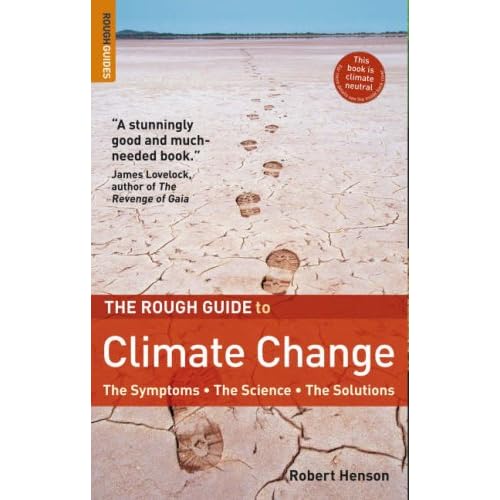
Synopsis
"The Rough Guide to Climate Change" is a complete, unbiased guide to one of the most pressing problems facing humanity. From the current situation and back ground science to the government sceptics and possible solutions, this book covers the whole subject. The guide looks at: visible symptoms of change from a warming planet; how global warming works; the evolution of our atmosphere over the last 4.5 billion years; what computer simulations of climate reveal about our past, present, and future; the sceptics: Who are they? What are their grounds for disagreeing with the crowd? Battle of the titans: the oil industry vs. the global commons; global warming in the media: A review of the last few decades; global solutions: What governments and scientists are doing to try and solve the problem; plus much, more. The guide also includes lifestyle advice and tips for consumers who want to make a difference in tomorrow's climate, and comes complete with a gloassary of websites for further information.
Disponível na Amazon.co.uk
Estacionamento ilegal
Alguém tem alguma opinião formada sobre a muito propalada campanha da CML contra o estacionamento ilegal? Ouve melhorias?
A propósito deixo aqui um video de uma personagem que dá pelo nome de "Jimmy Justice" e que percorre New York à procura de infractores muito especiais....
A propósito deixo aqui um video de uma personagem que dá pelo nome de "Jimmy Justice" e que percorre New York à procura de infractores muito especiais....
quarta-feira, 10 de outubro de 2007
Health and Consumer Protection DG
What are some of the main challenges that our DG may face in the future? How will the environment in which we operate evolve in the coming 10-20 years? For example: will consumers have confidence in what we purchase in a supermarket? Will consumers be increasingly looking for ethical or local products? Will citizens live longer and healthier? Will consumers spend even more time on the internet looking for information or making a purchase?
What are the different future scenarios? What does it mean for us? How should we prepare ourselves pro-actively?
segunda-feira, 8 de outubro de 2007
Communicating Climate Change:Discourses, Mediations and Perceptions
Nos próximos dias 19 e 20 de Novembro, vai realizar-se na Universidade do Minho uma conferência subordinada ao tema "Communicating Climate Change:Discourses, Mediations and Perceptions".
Esta conferência é organizada pela oradora do nosso debate de 13 de Dezembro, a professora Anabela Carvalho.
Toda a informação sobre a conferência encontra-se disponível aqui
Esta conferência é organizada pela oradora do nosso debate de 13 de Dezembro, a professora Anabela Carvalho.
Toda a informação sobre a conferência encontra-se disponível aqui
quinta-feira, 4 de outubro de 2007
Reunião da Plataforma
A próxima reunião da Plataforma vai ter lugar na próxima terça-feira às 21h.
O Tiago ofereceu a sua casa para a reunião, por isso vamos aproveitar!
O Tiago ofereceu a sua casa para a reunião, por isso vamos aproveitar!
segunda-feira, 1 de outubro de 2007
Marcação de reunião
Proponho que a Plataforma se reuna na terça-feira dia 9 de Outubro às 21h, que é acham?
terça-feira, 25 de setembro de 2007
Proposta de acta da reunião de 13 de Setembro de 2007
Como prometido e com bastante atraso cá vai a minha versão dos acontecimentos:
No dia 13 de Setembro decorreu a terceira reunião da Plataforma de Discussão e Intervenção Ambiental (PDIA) tendo estado presentes cerca de uma dezena de pessoas. Nesta reunião discutiram-se sobretudo aspectos relacionados com a realização de acções concretas que consubstanciassem os aspectos mais relevantes das discussões internas fomentadas pelo Blog e mantidas nas reuniões da PDIA.
De forma a sensibilizar a esfera pública para as questões com uma relevante dimensão ambiental, a PDIA deve transpor a barreira do debate interno, interessante, mas inócua do ponto de vista social.
Até este momento a PDIA organizou duas acções concretas que possibilitaram um maior envolvimento social: o visionamento de um documentário sobre alterações climáticas e a participação no passeio de bicicleta da Massa Crítica de Julho de 2007, que foi o maior de sempre. Neste último evento os elementos do PDIA envergaram t-shirts concebidas para esta acção, distribuíram panfletos apelando ao uso da bicicleta e promoveram este meio de transporte em conversa com os muito transeuntes abordados. O sentimento geral é de que a recepção das pessoas foi genericamente muito positiva e que esta iniciativa deve ser repetida e ampliada.
Assim, foi proposto organizar um Ciclo de Debates PDIA em 2008, estruturado em volta de um só tema, ou de vários, para criar um maior conhecimento sobre assuntos relevantes em relação aos quais é sentida a necessidade de maior aprofundamento antes de a PDIA tomar posições públicas sobre esses temas. Foram abordados ainda assuntos como a estrutura do debate a adoptar (orador, oradores temas, estruturas), os temas possíveis e os oradores a convidar. Desta discussão resultou a seguinte lista de temas possíveis:
1º Debate: A comunicação social e as alterações climáticas
Rationale – O papel da comunicação social na sensibilização da população para as alterações climáticas;
Local – Faculdade Ciências
Data – 13 Dezembro às 18.00
Orador – Professora Universidade do Minho
2º Debate: Economia verde
Rationale – A economia como parte da solução e não como parte do problema. Como a legislação promove e pode promover a substituição de produtos ou serviços ambientalmente menos eficientes. Case-studies de medidas de gestão, produtos, serviços ou organizações que inovaram e cresceram com produtos ambientalmente relevantes
3º Debate: Poluição e qualidade de vida
Outras ideias para debates:
- Espaços verdes de Lisboa
- A sociedade consumo e a geração de resíduos
- Políticas de planeamento urbanístico Lisboa. Projecto CML - ESBAL
- Mobilidade urbana
- Como seria a Lisboa ideal?
- Como seria o meu bairro?
- Comércio Justo
- Transgénicos
Penso que seria positivo estruturar tanto quanto possível as ideias apresentadas e colocava à consideração dos associados que, quando se propõe um tema se apresente uma ficha com uma página no máximo, que cubra sucintamente os seguintes aspectos:
- Título
- Rationale
- Formato
- Oradores
- Local
- Data
- Deliverables (por exemplo, relatórios de 5/10 páginas sobre cada tema)
Relativamente à realização de acções de rua foi sugerida a realização de passeios de bicicleta aos domingos à tarde, com motivos ecológico-culturais, como por exemplo:
- Passeio no Jardim da Estrela com botânico
- Passeio por Alfama com historiador
Foram ainda debatidas outras acções de rua que carecem de maior aprofundamento e que deverão ser debatidas em sede própria durante a próxima reunião.
Agradeço que completem o registo da reunião com informações que por lapso posso ter omitido. Obrigado
No dia 13 de Setembro decorreu a terceira reunião da Plataforma de Discussão e Intervenção Ambiental (PDIA) tendo estado presentes cerca de uma dezena de pessoas. Nesta reunião discutiram-se sobretudo aspectos relacionados com a realização de acções concretas que consubstanciassem os aspectos mais relevantes das discussões internas fomentadas pelo Blog e mantidas nas reuniões da PDIA.
De forma a sensibilizar a esfera pública para as questões com uma relevante dimensão ambiental, a PDIA deve transpor a barreira do debate interno, interessante, mas inócua do ponto de vista social.
Até este momento a PDIA organizou duas acções concretas que possibilitaram um maior envolvimento social: o visionamento de um documentário sobre alterações climáticas e a participação no passeio de bicicleta da Massa Crítica de Julho de 2007, que foi o maior de sempre. Neste último evento os elementos do PDIA envergaram t-shirts concebidas para esta acção, distribuíram panfletos apelando ao uso da bicicleta e promoveram este meio de transporte em conversa com os muito transeuntes abordados. O sentimento geral é de que a recepção das pessoas foi genericamente muito positiva e que esta iniciativa deve ser repetida e ampliada.
Assim, foi proposto organizar um Ciclo de Debates PDIA em 2008, estruturado em volta de um só tema, ou de vários, para criar um maior conhecimento sobre assuntos relevantes em relação aos quais é sentida a necessidade de maior aprofundamento antes de a PDIA tomar posições públicas sobre esses temas. Foram abordados ainda assuntos como a estrutura do debate a adoptar (orador, oradores temas, estruturas), os temas possíveis e os oradores a convidar. Desta discussão resultou a seguinte lista de temas possíveis:
1º Debate: A comunicação social e as alterações climáticas
Rationale – O papel da comunicação social na sensibilização da população para as alterações climáticas;
Local – Faculdade Ciências
Data – 13 Dezembro às 18.00
Orador – Professora Universidade do Minho
2º Debate: Economia verde
Rationale – A economia como parte da solução e não como parte do problema. Como a legislação promove e pode promover a substituição de produtos ou serviços ambientalmente menos eficientes. Case-studies de medidas de gestão, produtos, serviços ou organizações que inovaram e cresceram com produtos ambientalmente relevantes
3º Debate: Poluição e qualidade de vida
Outras ideias para debates:
- Espaços verdes de Lisboa
- A sociedade consumo e a geração de resíduos
- Políticas de planeamento urbanístico Lisboa. Projecto CML - ESBAL
- Mobilidade urbana
- Como seria a Lisboa ideal?
- Como seria o meu bairro?
- Comércio Justo
- Transgénicos
Penso que seria positivo estruturar tanto quanto possível as ideias apresentadas e colocava à consideração dos associados que, quando se propõe um tema se apresente uma ficha com uma página no máximo, que cubra sucintamente os seguintes aspectos:
- Título
- Rationale
- Formato
- Oradores
- Local
- Data
- Deliverables (por exemplo, relatórios de 5/10 páginas sobre cada tema)
Relativamente à realização de acções de rua foi sugerida a realização de passeios de bicicleta aos domingos à tarde, com motivos ecológico-culturais, como por exemplo:
- Passeio no Jardim da Estrela com botânico
- Passeio por Alfama com historiador
Foram ainda debatidas outras acções de rua que carecem de maior aprofundamento e que deverão ser debatidas em sede própria durante a próxima reunião.
Agradeço que completem o registo da reunião com informações que por lapso posso ter omitido. Obrigado
sexta-feira, 21 de setembro de 2007
Lisboa: Radares da Av. Marechal Spínola «sobem» para 80 km/h
O limite de velocidade no prolongamento da Avenida Estados Unidos da América, onde existem radares, foi alterado de 50 para 80 quilómetros por hora, desde as 00:00 de hoje, disse à Lusa o comandante da Polícia Municipal.
O responsável policial adiantou que «os radares colocados nesta artéria [Avenida Marechal Spínola], ficaram calibrados para os 80 quilómetros/hora de imediato», após autorização da Autoridade Nacional de Segurança Rodoviária.
A imposição de limite máximo de 50 quilómetros/hora nesta via tem sido criticada, existindo uma petição disponível na Internet que solicitou a alteração da velocidade em algumas vias para 80 quilómetros/hora, que já reuniu mais de 10.000 assinaturas.
O responsável policial adiantou que «os radares colocados nesta artéria [Avenida Marechal Spínola], ficaram calibrados para os 80 quilómetros/hora de imediato», após autorização da Autoridade Nacional de Segurança Rodoviária.
A imposição de limite máximo de 50 quilómetros/hora nesta via tem sido criticada, existindo uma petição disponível na Internet que solicitou a alteração da velocidade em algumas vias para 80 quilómetros/hora, que já reuniu mais de 10.000 assinaturas.
quinta-feira, 20 de setembro de 2007
Tragam as vossas bicicletas, skates, patins, pernas, etc etc...
Cascais assinala, mais uma vez, a Semana da Mobilidade que este ano decorre entre os dias 16 e 23 de Setembro, englobando diversas acções de entre as quais se podem destacar “Cascais Activo é Desporto para Todos”, o Dia Europeu Sem Carros – Melhores Ruas para Todos e a Marginal Ciclável (dia 23, entre as 08H00 e as 12H00). A iniciativa Baía sem Carros ocorrerá, para além do dia 22, também no dia 23 de Setembro, face ao sucesso das edições anteriores.
http://www.cm-cascais.pt/Cascais/Noticias/semana.htm
PS - Enganei-me eu pensava que a marginal era ciclavel no sabado tambem. Parece que é so no domingo. Pena.
http://www.cm-cascais.pt/Cascais/Noticias/semana.htm
PS - Enganei-me eu pensava que a marginal era ciclavel no sabado tambem. Parece que é so no domingo. Pena.
quarta-feira, 12 de setembro de 2007
Uma boa notícia
A Câmara Municipal de Lisboa inicia esta quarta-feira uma campanha para «libertar os passeios de carros», e «contrariar o estacionamento de carros em segunda fila», tal como prometeu António Costa na campanha eleitoral.
A câmara pretende criar uma «cidade sem barreiras» com o objectivo de que os «habitantes possam usufruir do espaço público da cidade» e libertar áreas utilizadas por viaturas, de forma abusiva e ilegal pelos automobilistas.
Neste sentido a autarquia vai reforçar o policiamento, já a partir de hoje, numa «primeira fase» desde o eixo do Campo Pequeno até ao Marquês de Pombal incluindo o Parque Eduardo VII, estendendo ainda do Largo do Rato até às avenidas Infante Santo e Dom Carlos I, informa a autarquia.
in Diário Digital
A câmara pretende criar uma «cidade sem barreiras» com o objectivo de que os «habitantes possam usufruir do espaço público da cidade» e libertar áreas utilizadas por viaturas, de forma abusiva e ilegal pelos automobilistas.
Neste sentido a autarquia vai reforçar o policiamento, já a partir de hoje, numa «primeira fase» desde o eixo do Campo Pequeno até ao Marquês de Pombal incluindo o Parque Eduardo VII, estendendo ainda do Largo do Rato até às avenidas Infante Santo e Dom Carlos I, informa a autarquia.
in Diário Digital
quarta-feira, 5 de setembro de 2007
Reunião da Plataforma dia 13
A próxima reunião da Plataforma é na quinta-feira dia 13 de Setembro às 21h. A reunião decorrerá no mesmo local em que decorreram as anteriores, a sala de condóminos do prédio nº 7 da Rua Rainha D. Luísa de Gusmão.
O ponto de encontro é o café Barão.
A estação de metro mais próxima é a Quinta das Conchas, também se pode lá chegar de autocarro: 1, 7, 36, 47, 106 e 108.
Podem ver o mapa da zona aqui.
O ponto de encontro é o café Barão.
A estação de metro mais próxima é a Quinta das Conchas, também se pode lá chegar de autocarro: 1, 7, 36, 47, 106 e 108.
Podem ver o mapa da zona aqui.
sexta-feira, 31 de agosto de 2007
Lisboa de regresso à anormalidade
 Aproveitem bem aqueles que vivem em Lisboa e que por aqui ficaram em Agosto. O mês está a acabar e 2.ª feira vai ser tudo diferente. Aliás, já começou a ser, pois já muita gente regressou de férias.
Lisboa está assim a entrar na anormalidade que a caracteriza o ano todo: carros estacionados em cima do passeio, carros estacionados em segunda fila, muitos carros a circular nas estradas…
Carros, carros e mais carros nas estradas de Lisboa…
Estradas, pois!, que as ruas de Lisboa não são ruas. Não são para se andar a pé, para nos perdermos, deambularmos sem corrermos o risco de ter que ir para a estrada que o passeio é estreito ou tem carros lá estacionados.
Não são para tirarmos os olhos fixos do chão – desenganem-se aqueles que acham que é o stress da capital que faz com que ande tudo macambúzio e de olhos no chão. A merda, o cocó, a trampa, as fezes dos cães e o laxismo dos seus donos obrigam-nos a isso.
Não é para ser vivida, esta cidade, mas para ser conduzida. Portanto, aqueles que andam a pé ou de transportes públicos, preparem-se.
A guerra segue dentro de momentos.
(publicado originalmente em O Bitoque)
Marcação de reunião da Plataforma
Acho que está na altura da Plataforma voltar a reunir-se. Proponho que nos encontremos na segunda-feira dia 10 de Setembro às 21h. Parece-vos bem?
segunda-feira, 27 de agosto de 2007
Riscos Naturais e Tecnológicos e sua prevenção
Em Novembro vai decorrer em Évora um curso sobre "Riscos Naturais e Tecnológicos e sua prevenção", parece interessante. Tem a duração de dois dias, a inscrição é gratuita e ainda oferecem um livro. Podem saber mais aqui.
quarta-feira, 22 de agosto de 2007
Os radares outra vez
Os radares que foram colocados em algumas ruas de Lisboa trouxeram uma novidade, de repente as pessoas começaram a ser penalizadas por desrespeitarem o limite de velocidade que muitos já tinham esquecido. Houve protestos como há sempre que são atacados direitos adquiridos. Argumentou-se que a redução da velocidade naquelas zonas provocava engarrafamentos. Defendeu-se um aumento do limite de velocidade nestes locais, argumentando-se que seriam zonas com poucos peões e que por isso o aumento deste limite não colocaria a vida das pessoas em risco.
Acho esta hipótese tão absurda que sinto como que uma comichão no cérebro quando oiço alguém argumentar em seu favor.
Em primeiro lugar ao contrário do que é costume dizer-se, os locais onde foram colocados os radares são perigosos. Entradas e saídas de túneis, descidas íngremes, cruzamentos. Locais onde se aprende nas aulas de condução que se deve abrandar e estar particularmente atento. Não faz por isso qualquer sentido permitir que nestes locais se ande a uma velocidade maior do que no resto da cidade.
Em segundo lugar porque não tem nenhum cabimento permitir os carros circularem a velocidades de 70-80 Km/h em troços de 50 metros, sendo estes obrigados a andar a 50Km/h antes e depois, não é lógico (porque o tempo poupado seria de apenas alguns segundos), não é prático, e de todo não é eficiente do ponto de vista energético.
Em terceiro lugar sou absolutamente contra esta medida, porque me parece evidente que esta levaria mais tarde ou mais cedo à oficialização de algo que de certa forma já existe, que é a rede de vias rápidas de Lisboa. Primeiro circulamos a 80Km/h nos túneis, depois segue-se a Avenida da República e depois porquê parar na Fontes Pereira de Melo?
Bem depressa teremos uma autoestrada Lumiar-Terreiro de Paço em lugar da prometida via ciclável. E porquê abrandar no troço Algés-Expo?
Outro dia e a conduzir e atravessaram-se dois peões à minha frente mesmo antes da entrada do túnel de Entre Campos. Conduzia a 50 Km/h pelo que não me custou abrandar para os deixar passar, a situação seria muito diferente se eu circulasse a 80 Km/h.
Acho que todas as medidas que façam entrar menos carros na cidade são benéficas.
Também acho que todas as medidas que conduzam à moderação da velocidade de tráfego na cidade são positivas, porque tornam as ruas mais seguras e agradáveis. Embora discorde da forma escolhida para alcançar este objectivo, considero que esta oportunidade não deve ser desperdiçada, defendo por isso medidas de consolidação. Como sejam a introdução de lombas em zonas consideradas de risco, passadeiras com a altura do passeio, semáforos com sensores de velocidade.
Para que Lisboa não seja apenas um local onde se passa depressa.
Acho esta hipótese tão absurda que sinto como que uma comichão no cérebro quando oiço alguém argumentar em seu favor.
Em primeiro lugar ao contrário do que é costume dizer-se, os locais onde foram colocados os radares são perigosos. Entradas e saídas de túneis, descidas íngremes, cruzamentos. Locais onde se aprende nas aulas de condução que se deve abrandar e estar particularmente atento. Não faz por isso qualquer sentido permitir que nestes locais se ande a uma velocidade maior do que no resto da cidade.
Em segundo lugar porque não tem nenhum cabimento permitir os carros circularem a velocidades de 70-80 Km/h em troços de 50 metros, sendo estes obrigados a andar a 50Km/h antes e depois, não é lógico (porque o tempo poupado seria de apenas alguns segundos), não é prático, e de todo não é eficiente do ponto de vista energético.
Em terceiro lugar sou absolutamente contra esta medida, porque me parece evidente que esta levaria mais tarde ou mais cedo à oficialização de algo que de certa forma já existe, que é a rede de vias rápidas de Lisboa. Primeiro circulamos a 80Km/h nos túneis, depois segue-se a Avenida da República e depois porquê parar na Fontes Pereira de Melo?
Bem depressa teremos uma autoestrada Lumiar-Terreiro de Paço em lugar da prometida via ciclável. E porquê abrandar no troço Algés-Expo?
Outro dia e a conduzir e atravessaram-se dois peões à minha frente mesmo antes da entrada do túnel de Entre Campos. Conduzia a 50 Km/h pelo que não me custou abrandar para os deixar passar, a situação seria muito diferente se eu circulasse a 80 Km/h.
Acho que todas as medidas que façam entrar menos carros na cidade são benéficas.
Também acho que todas as medidas que conduzam à moderação da velocidade de tráfego na cidade são positivas, porque tornam as ruas mais seguras e agradáveis. Embora discorde da forma escolhida para alcançar este objectivo, considero que esta oportunidade não deve ser desperdiçada, defendo por isso medidas de consolidação. Como sejam a introdução de lombas em zonas consideradas de risco, passadeiras com a altura do passeio, semáforos com sensores de velocidade.
Para que Lisboa não seja apenas um local onde se passa depressa.
terça-feira, 21 de agosto de 2007
Os transgénicos e o ecoterrorismo
Na passada sexta-feira um grupo de ecologistas invadiu um campo de milho transgénico e destrui uma plantação com cerca de um hectare.
Este acontecimento, novo em Portugal, levanta algumas questões interessantes, que merecem ser discutidas. Vale a pena discutir os alegados efeitos nefastos deste tipo de plantações para o meio ambiente e para a saúde das pessoas. Também me parece oportuno discutir esta forma de agir e as suas consequências.
Este acontecimento, novo em Portugal, levanta algumas questões interessantes, que merecem ser discutidas. Vale a pena discutir os alegados efeitos nefastos deste tipo de plantações para o meio ambiente e para a saúde das pessoas. Também me parece oportuno discutir esta forma de agir e as suas consequências.
sexta-feira, 17 de agosto de 2007
Petição para revisão do código de estrada
Está em curso uma petição que reclama a revisão do código de estrada. As alterações propostas vão no sentido de tornar as estradas mais seguras para os ciclistas. Podem ler e assinar aqui.
domingo, 12 de agosto de 2007
Extraordinário
Por enquanto ainda ninguém defendeu a legalização do estacionamento no passeio. Mas pela mesma ordem de ideias da outra petição, pode também dizer-se que se em Lisboa há milhares de carros estacionados em cima do passeio, não pode querer dizer que em Lisboa há milhares de bandalhos sem qualquer respeito pelo próximo. Não, certamente que é a culpa é da lei. Por isso vão aprendendo com este senhor
P.S. A Ana mandou-me este vídeo como ela não o pôs cá, ponho eu.
P.S. A Ana mandou-me este vídeo como ela não o pôs cá, ponho eu.
sexta-feira, 10 de agosto de 2007
Terra de loucos
Acabei de ler na TSF online que está em curso uma petição online em que se pede para alterar o limite de velocidade na cidade para 80Km/h.
O mais grave é que o António Costa mostrou abertura para isso.
Seria boa ideia fazer uma petição em que se defenda a manutenção dos 50Km/h como limite máximo na cidade, e criação de zonas em que a velocidade máxima de circulação são 30Km/h (as zonas 30).
Lisboa não é uma autoestrada é uma cidade.
O mais grave é que o António Costa mostrou abertura para isso.
Seria boa ideia fazer uma petição em que se defenda a manutenção dos 50Km/h como limite máximo na cidade, e criação de zonas em que a velocidade máxima de circulação são 30Km/h (as zonas 30).
Lisboa não é uma autoestrada é uma cidade.
quarta-feira, 8 de agosto de 2007
Golfinho branco dado como extinto
O Golfinho Branco do rio Yangtze, China, foi hoje declarado extinto. O golfinho que não pôde conviver com o Homem.
Comunicado da OMM sobre fenómenos meteorológicos e climáticos extremos
A Organização Meteorológica Mundial (OMM) divulgou um comunicado de imprensa (resumo em português) sobre os eventos climáticos extremos que se têm verificado um pouco por todo o mundo, apesar de Portugal ter sido poupado até agora.
sexta-feira, 3 de agosto de 2007
"365 maneiras de mudar o mundo"
"365 ways to change the world" . Este "site" dá algumas sugestões sobre formas de agir. Podem subscrever a "newsletter". Eis algumas ideias de "How to save the world in your spare time":
1 - “Thought without constructive action is demoralising”.
2 - "You can accomplish anything you want so long as you don’t care who gets the credit".
3 - "There is no one so famous or important that you cannot pick up the phone and talk to them. Even famous people need baths".
4- "Sometimes governments lie".
5 - "No one is powerless without their own permission".
6- "Changing the world is only a matter of time… if you have enough people on your side. Getting them on your side is what takes time".
Subscrever:
Mensagens (Atom)


